
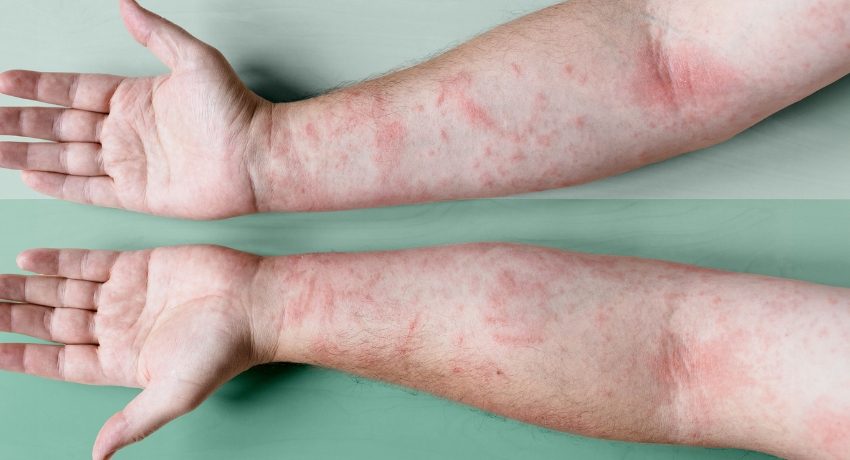

Got itchy, red, or dry skin? It might be eczema—or could it be something else entirely? Skin conditions often look alike at first glance, making it tough to tell them apart. But identifying eczema correctly is crucial for getting the right treatment and relief.
In this blog, we’ll help you spot the differences between eczema and other common skin issues like psoriasis, contact dermatitis, fungal infections, and more.
What Is Eczema?
Eczema is a chronic inflammatory skin disorder that results in dry, red, and itchy patches. It can flare up at any time and is commonly triggered by allergens, irritants, stress, or weather changes. While it can appear anywhere on the body, it often shows up on the face, neck, hands, and behind the knees or elbows.
Eczema symptoms may include:
- Constant itching, especially at night.
- Dry, cracked, or scaly skin.
- Red or brownish-gray patches.
- Small, raised bumps that may ooze or crust.
- Thick or leathery skin from scratching.
But here’s the tricky part—many of these signs can also show up with other skin conditions.
Eczema or Psoriasis?
Both eczema and psoriasis cause red, inflamed skin—but they have some key differences:
- Eczema is typically itchy first, followed by a rash.
- Psoriasis often appears as well-defined plaques with silver scales.
- Location matters. Psoriasis tends to appear on the scalp, elbows, knees, and lower back, while eczema is more common in skin folds and on the hands.
Psoriasis also tends to be more stubborn and may involve nail changes or joint pain (psoriatic arthritis), which eczema usually does not.
Eczema or Contact Dermatitis?
This one can be tricky—contact dermatitis is technically a type of eczema. But it’s usually triggered by a specific irritant or allergen, like soaps, cosmetics, or poison ivy.
- Contact dermatitis is localized to the area of exposure.
- Eczema (atopic dermatitis) is often more widespread and chronic.
- The rash from contact dermatitis often appears suddenly and improves once the irritant is removed.
If your rash shows up shortly after using a new product, contact dermatitis is more likely the culprit.
Eczema treatment in Alexandria typically involves daily moisturizing, avoiding known triggers, and using topical corticosteroids or non-steroidal creams to reduce inflammation and itch.
Eczema or Fungal Infection?
Ringworm and athlete’s foot can mimic eczema’s red, itchy appearance—but fungal infections have some telltale signs:
- Fungal infections often have a ring-shaped or scalloped edge.
- They may respond well to antifungal creams, unlike eczema.
- The itching in fungal infections is usually intense but doesn’t usually result in dry or scaly patches outside the infected area.
If a rash spreads or doesn’t improve with moisturizers or steroids, consider a fungal source.
Eczema or Rosacea?
Rosacea usually affects the face—especially the nose, cheeks, forehead, and chin—and causes redness, visible blood vessels, and sometimes acne-like bumps.
- Unlike eczema, rosacea doesn’t usually itch.
- It’s more likely to flare due to heat, spicy food, or alcohol.
- Eczema on the face tends to be dry and flaky with noticeable itching.
If your facial redness doesn’t come with dryness or itching, rosacea might be the answer.
According to the National Eczema Association, 1 in 10 individuals will develop eczema during their lifetime, and misdiagnosis is common—leading to delayed or improper treatment.
Tips for Proper Diagnosis
Still unsure about what’s going on with your skin? Here’s what can help:
- Track your triggers: Noting flare-ups after certain foods, weather, or products can provide insight.
- Observe location and pattern: Eczema loves skin folds, while psoriasis often targets extensor surfaces.
- Note the itch: Eczema is intensely itchy; other conditions may not be.
- Consult a dermatologist: A skin doctor can diagnose accurately using visual exam, patch testing, or skin scrapings.
Treating Eczema The Right Way
Once you’ve confirmed it’s eczema, here’s how to manage it:
- Moisturize daily with fragrance-free creams or ointments.
- Avoid triggers like harsh soaps, allergens, and stress.
- Use topical treatments like corticosteroids or non-steroidal creams (as prescribed).
- Consider lifestyle changes such as humidifiers and hypoallergenic bedding.
Don’t Let Guesswork Decide Your Skin’s Fate
Eczema may look like other skin conditions—but there are subtle signs that set it apart. Understanding the differences can help you take control of your skin and find relief faster. Whether it’s eczema, psoriasis, or something else entirely, getting the right diagnosis is step one to healing. Still in doubt? Seek professional guidance from our skin doctor today.